Expanding MBSS Capabilities Through Portability
Sometimes we’re asked, “Why choose a portable system for MBSS instead of a stationary setup?”
It’s a fair question, and one that becomes much easier to answer when you look at what happens in real clinical environments.
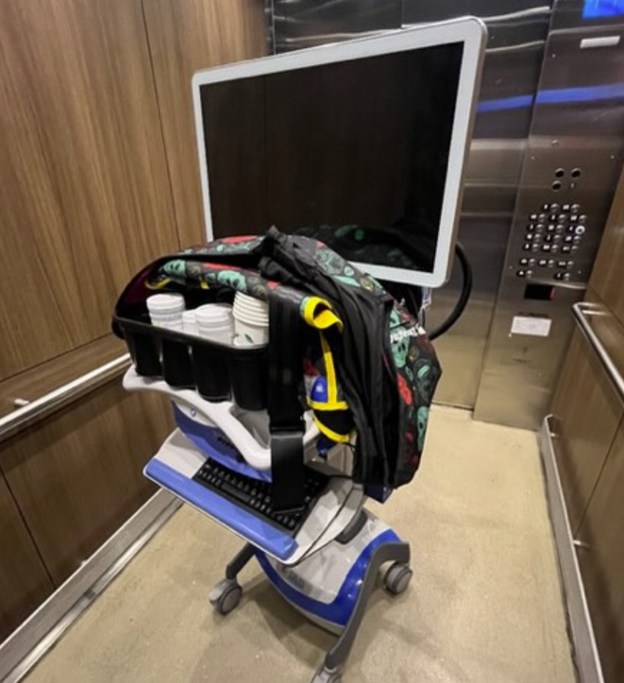
Recently, Amy Jenavie shared a case that highlights exactly why portability matters. Using a mobile TIMS MVP system paired with a C-arm, she completed a modified barium swallow study (MBSS) for a patient with a tracheostomy who was on a ventilator. With respiratory therapy present at bedside and a Passy-Muir Valve in place, the team was able to complete the study efficiently, develop an individualized plan of care, and determine safe recommendations for advancing oral intake.
This is the reality of dysphagia care. Not every patient can be transported. Not every study fits neatly into a radiology schedule. And not every critical clinical decision can wait.
Portability creates options, and those options directly impact patient care.
One of the most immediate advantages of a mobile system is flexibility within the hospital environment. If a radiology suite is unavailable due to maintenance, scheduling constraints, or competing priorities, a portable setup allows clinicians to continue completing studies without delay. Care doesn’t stop because a room is down. The system moves with the team.
Beyond radiology, mobile systems expand where MBSS can take place. With the use of a C-arm, studies can be performed in alternative locations. This is especially important for medically complex patients who are not appropriate for transport. Bringing the study to the patient can reduce risk, improve efficiency, and ensure timely clinical decision-making.
Portability also enhances how clinicians interact with patients during the study. With tools like telestrations, clinicians can provide real-time education, visually demonstrating findings and helping patients and families better understand swallowing physiology and recommendations. These moments can improve patient engagement and support adherence to care plans.
In addition, mobile systems support more dynamic workflows during acquisition. Instead of relying solely on live observation, clinicians can quickly review captured swallows, analyze specific events, and confirm whether additional trials are needed. This reduces the need for repeat exposures and allows for more targeted, efficient studies. The ability to review, edit, and analyze in real time strengthens both clinical confidence and diagnostic accuracy.
Ultimately, the choice between a stationary and portable system isn’t just about equipment, it’s about access, efficiency, and patient-centered care.
Portable TIMS MBSS systems allow clinicians to meet patients where they are, adapt to the realities of the clinical environment, and make timely, informed decisions that impact outcomes.